Do I need a pressure tank for a submersible well pump?
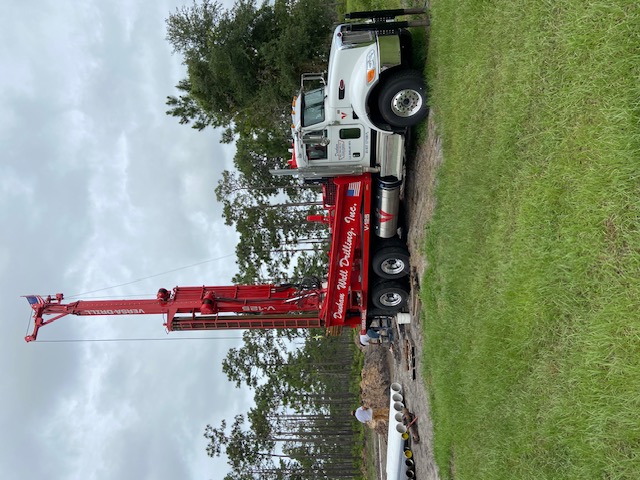
A pressure tank for a submersible well pump is usually part of a properly working residential water system, because it helps keep water pressure steady, reduces pump cycling, and protects the pump and controls from unnecessary wear.
How a pressure tank works with a submersible well pump
A submersible pump sits down in the well and pushes water up to the house. The pressure tank stores a small amount of pressurized water so the pump does not have to start every time someone opens a faucet.
That matters for comfort and equipment life. Without a tank, the pump can short-cycle, which means more starts and stops. Over time, that can wear out pressure switches, controls, and the pump itself.
For homeowners in Polk County and across Central Florida, this setup is common on most drinking-water wells. If you are dealing with a pump issue now, our Pump Repair & Installation page explains the kinds of pump and tank work we handle in-house.
What the pressure tank does
A pressure tank helps:
- Keep water pressure more consistent at sinks, showers, and appliances
- Reduce rapid cycling of the pump
- Give the system a buffer so small water demands do not start the pump every time
- Support the pressure switch and control system
On a properly sized system, the tank and pump work together. That is why we look at the whole water system, not just the pump.
Do you always need a pressure tank?
In most submersible well pump installations serving a house, yes, a pressure tank is part of the system. There are some specialty setups and control systems, but for standard residential well service, a tank is the normal way to maintain usable water pressure.
If the question is whether you can run a submersible pump without a tank, the practical answer is usually no for a typical home system. Doing so can cause cycling problems, pressure instability, and unnecessary wear.
We see this often in Central Florida wells where the pump may be fine, but the tank has failed, lost air charge, or been undersized for the demand. In those cases, the system may act like the pump is bad when the real problem is the tank or the controls.
Signs your pressure tank may be the problem
A bad or failing tank can create symptoms that look like pump trouble. Common signs include:
- Pump turning on and off too often
- Water pressure surging or dropping
- Faucet pressure that feels inconsistent
- Pump running longer than it should
- Water hammer or rapid pressure changes
- Tank exterior showing leaks, rust, or corrosion
If you notice these issues, it is worth having the full system checked. We service pumps and tanks together, and our shop includes a full-line machine shop for in-house rebuilds when needed.
Pressure tank sizing and pump performance
A pressure tank is not one-size-fits-all. The right tank depends on the pump, pressure settings, and how much water the property uses. A home with regular irrigation demand may need a different setup than a small household well.
Why sizing matters
If the tank is too small, the pump may cycle too frequently. If it is not charged correctly, you can get weak performance or poor pressure recovery. If the system is mismatched, the homeowner often notices it first as annoying pressure swings.
That is one reason we evaluate the entire well system during service calls. We also handle Water Well Drilling for new residential, agricultural, and commercial wells, so we know how pump, tank, casing, and water demand fit together from the start.
When to call for pump and tank service
You should call a well professional if:
- The pump cycles on and off rapidly
- The water pressure changes from one fixture to another
- The system loses pressure overnight
- The tank looks damaged or waterlogged
- The pump seems to run more than normal
- You hear control-switch chatter or repeated start-stop behavior
Do not try to work on electrical service, pressure tanks, or deeper well components yourself. Those repairs should be handled by a qualified contractor.
At Dunham Well Drilling, Inc., we are a family business that has served Winter Haven and Central Florida since 1950. We are a [Licensed Water Well Drilling Contractor] and a member of the FGWA, and we work on residential, irrigation, commercial, and industrial water systems across Polk County.
What Dunham can check on your system
When a homeowner calls about a pressure tank submersible well pump issue, we can look at the whole system, including:
- Pump operation
- Pressure tank condition
- Pressure switch and controls
- Water pressure symptoms
- Signs of electrical or lightning damage
- Related water treatment issues if the water is hard, smelly, or staining
If your issue started after a storm, our Lightning Damage Repair service covers pump and motor repair after a strike, plus pressure-switch and control replacement. Central Florida gets plenty of lightning, and we see that damage every season.
If the water itself is the problem, not just the pressure, we also provide Water Filtration & Treatment and on-site water testing to identify what is actually in your water.
Central Florida well owners: don’t guess on tank problems
A pressure tank is a small part of the system, but it has a big effect on how a submersible pump performs. If you are seeing pressure swings, short cycling, or low-water complaints, the tank may be part of the issue even if the pump is still working.
For homeowners in Winter Haven, Polk County, and the surrounding Central Florida area, we can help troubleshoot the system and recommend the right repair. We also service nearby communities, including Winter Haven and the rest of our regular service area.
Call Dunham Well Drilling, Inc. at (863) 965-2881 if your pressure tank or submersible well pump is acting up. With 76 years in business, a full machine shop on-site, and pump and tank work handled under one roof, we can help you sort out the problem and get your well system back in shape.
Have a well or pump question?
Skip the form and call us. Our 24/7 answering service is always live.
Call (863) 965-2881