How often should you test your well water in Florida?
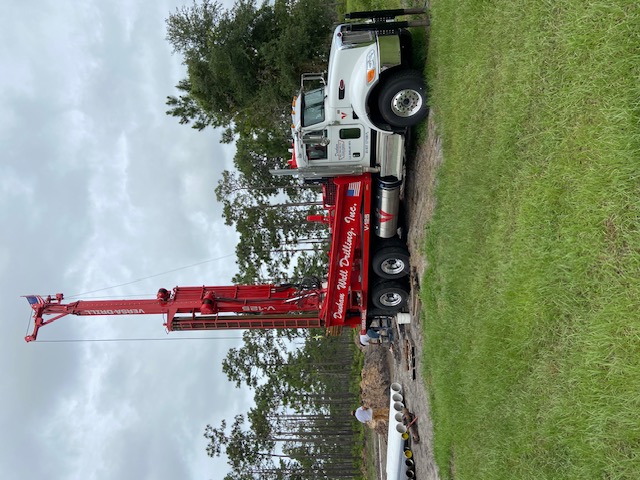
Well water testing in Florida should happen at least once a year for bacteria and nitrates, plus any time your water changes in taste, smell, or color, or after flooding, a hurricane, or work on your well.
That is the short answer. The longer answer depends on your well, your property, and what is happening around it. We have drilled and serviced wells across Polk County since 1950, and the same questions come up every season. Here is how we explain testing to Central Florida well owners.
How Often Should You Test Well Water in Florida?
Private wells in Florida are not regulated the way city water is. No utility tests your water for you. Keeping it safe is the owner's job.
Public health guidance, including the CDC, recommends testing a private well at least once a year. Annual testing gives you a baseline, so you can spot a problem early instead of after someone in the house gets sick.
Bacteria and Nitrates: Every Year
The two tests that matter most for drinking water safety are:
- Total coliform and E. coli bacteria. Coliform bacteria indicate that surface water or another contamination source may be reaching your well. E. coli points to fecal contamination and is a serious concern.
- Nitrates and nitrites. These often come from fertilizer, septic systems, and animal waste. High nitrate levels are especially dangerous for infants and pregnant women.
Central Florida has a lot of sandy soil, septic systems, and agricultural land, including citrus groves and pasture. Sand lets surface water move downward quickly. That makes annual bacteria and nitrate testing a smart habit, especially for shallower wells.
Mineral and Water Chemistry Checks
Beyond safety, it helps to check hardness, iron, pH, and hydrogen sulfide every few years, or whenever you notice a change. These usually are not health emergencies. They do affect your plumbing, appliances, fixtures, and how your water tastes and smells.
Many Polk County wells draw from the Floridan aquifer, which sits in limestone. Limestone means hard water is common, and sulfur and iron show up in plenty of local wells too. Knowing your numbers tells you whether treatment makes sense and what kind.
When to Test Your Well Water Sooner
An annual test is the minimum. Some situations call for well water testing right away, regardless of when you last tested:
- After flooding or a hurricane. Floodwater can carry bacteria, chemicals, and debris into a well, especially if the wellhead was submerged.
- After any work on the well. A new pump, a pump repair, a pressure tank replacement, or new plumbing can introduce bacteria into the system.
- After a new well is drilled. Test before your family drinks from it.
- When taste, smell, or color changes. Cloudy water, a rotten-egg smell, a metallic taste, or orange staining all deserve a closer look.
- When someone in the home gets sick with unexplained stomach illness.
- When a baby is on the way or an infant is drinking formula made with well water. Nitrates are the main concern here.
- When you buy a home with a well. Do not rely on an old report from the seller.
- When a septic problem shows up nearby, or new fertilizer or chemical use starts on neighboring land.
- When a well has sat unused for a long stretch, such as at a seasonal home.
If your well casing, wellhead, or well cap is damaged, testing alone will not fix the problem. Contamination can keep getting in until the well itself is repaired.
What Central Florida Well Water Testing Usually Finds
Every well is different, but these are the results we see most often in Polk County and the surrounding area.
Hydrogen sulfide. This is the classic rotten-egg smell. It is common in Florida wells and is often worst in hot water. It can also tarnish fixtures and corrode plumbing.
Iron. Iron causes orange or reddish staining on sinks, tubs, toilets, driveways, and anything your irrigation hits. It can also give water a metallic taste.
Hardness. Calcium and magnesium from limestone leave scale on fixtures, in water heaters, and on glassware. Hard water also makes soap work harder.
Bacteria. Positive coliform results often trace back to a cracked casing, a loose or missing well cap, surface water draining toward the wellhead, or recent work on the system.
Nitrates. These are more likely near farmland, heavily fertilized lawns, or septic drain fields, and more common in shallower wells.
The good news is that most of these problems have proven fixes. Our well water filtration and treatment work covers water softeners, iron removal systems, iron-sequestering systems, chlorination systems, and hydrogen sulfide treatment.
Where to Get Your Well Water Tested
There are two kinds of testing, and they serve different purposes.
Safety Testing Through a Certified Lab
For bacteria and nitrates, use a certified laboratory. Your county health department can point you to approved labs and explain how to collect a proper sample. Collection matters. A sample taken the wrong way, or held too long before it reaches the lab, can give misleading results.
On-Site Testing for Treatment
When the question is "Why does my water smell, stain, or leave scale?", we offer on-site water testing to identify what is actually in your water. We do not guess and sell you a softener when the real problem is sulfur, or an iron filter when you need something else. The test results tell us which treatment fits your well.
Dunham does both pump work and filtration work, which most companies do not. If a water problem is actually a pump, pressure tank, or well problem, we can handle that too, without sending you to a second contractor.
What to Do If Your Test Comes Back Bad
First, do not panic, and do not start pouring chemicals down the well yourself. Shock chlorination of a drilled well should be done by a licensed professional. Getting the dose wrong, or skipping the step of finding out why bacteria got in, means the problem often comes right back.
If you get a positive bacteria or high nitrate result:
- Switch to bottled water for drinking, cooking, and baby formula until the issue is resolved.
- Call a licensed well contractor to inspect the wellhead, casing, and cap.
- Fix the source of contamination, then disinfect the system properly.
- Retest to confirm the water is safe.
If the problem traces to your equipment, our pump repair and installation team works on jet pumps, submersible pumps, and pressure tanks. Our full-line machine shop lets us rebuild pumps in-house. We carry Goulds, Sta-Rite, Grundfos, and Schaefer, and new pump and tank installations come with the standard manufacturer's warranty.
Sometimes a well is simply too old, too shallow, or too compromised to fix. In that case, drilling a new water well to a better depth may be the long-term answer.
Keep Your Well Water Safe With Dunham Well Drilling
Dunham Well Drilling is a family business founded by Dick Dunham in 1950. We are a Licensed Water Well Drilling Contractor and a member of the Florida Ground Water Association (FGWA). Our shop is at 1341 42nd Street NW in Winter Haven, and we serve well owners throughout Polk County and Central Florida.
Call us at (863) 965-2881 if your well water test comes back positive for bacteria or high in nitrates, if your water has started to smell, stain, or taste different, or if you just had flooding or work done on your well. Our office is open Monday through Friday, 7:30 AM to 4:30 PM, and our 24/7 answering service is always live, with calls returned within 48 hours. With 76 years of experience in Polk County aquifer geology and both pump and filtration work under one roof, we can find the cause and fix it, not just treat the symptom.
Have a well or pump question?
Skip the form and call us. Our 24/7 answering service is always live.
Call (863) 965-2881