Low Well Water Pressure? 7 Common Causes and How to Fix Them
Losing water pressure on a private well? Here are the 7 most common causes, from the pressure tank to the pump, and how to tell which one you're dealing with.
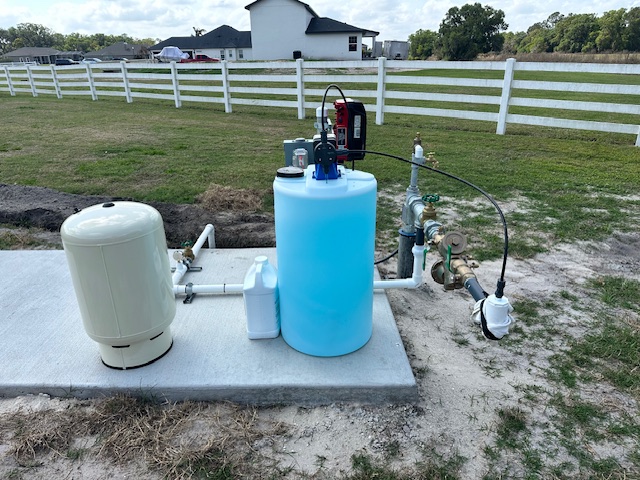
Low water pressure on a well system is annoying, but it's also a clue. The trick is reading the clue correctly, because "low pressure" can mean anything from a five-minute fix to a pump that's on its way out. Here's how we work through it in the field.
Start here: every faucet, or just one?
If one fixture is weak, the problem is usually that fixture (a clogged aerator, cartridge, or shutoff valve) and not your well. If the whole house dropped, then it's the well system, and the list below is where we look.
1. A waterlogged pressure tank
The most common culprit. Your pressure tank uses an air charge to hold pressure between pump cycles. When the bladder fails or the air charge is off, pressure gets weak and the pump "short-cycles" (clicks on and off rapidly). Tanks are wear items, so this is a routine fix.
2. A pressure switch set too low or failing
The switch tells the pump when to kick on and off (commonly around 40/60 psi). If it drifts, corrodes, or its contacts pit, you get low or erratic pressure. It's often adjustable or replaceable.
3. A clogged sediment filter
If you have a whole-house filter and haven't changed it lately, a plugged cartridge chokes flow to the entire house. Easy to check, easy to rule out.
4. A pump that's wearing out
Pumps don't last forever. A submersible or jet pump losing performance, whether from worn impellers or a failing motor, shows up as pressure that sags under demand. If your pump is older and pressure is fading, this jumps up the list. See our pump repair and replacement page for how we approach this.
5. A partially closed or failing valve
A main valve that's not fully open, or a failing check valve, quietly strangles flow. We check the obvious ones first, because it's a cheap thing to be wrong about in your favor.
6. A leak or a dropping water table
A hidden leak between the well and the house bleeds off pressure, and in a dry stretch a shallower well can struggle as the water table drops. Both are worth ruling out, especially if pressure got worse gradually.
7. Scale and iron buildup
Florida water can leave mineral and iron buildup that narrows pipes, screens, and fixtures over time. If you also fight staining or odor, water treatment often solves the pressure symptom and the water-quality one together.
When it's a quick fix vs. a call
Checking a filter, a main valve, or the air charge on a tank are reasonable homeowner checks. But anything involving the pump, wiring, or pulling equipment out of the well is a job for a licensed well pro. There's line voltage and heavy equipment down there.
Common questions
Why does my pump click on and off constantly? That's a classic waterlogged-tank sign, so have the tank and switch checked.
Could low pressure mean my well is running dry? It can, especially in drought, but a tank or pump issue is far more common, so it's worth diagnosing before assuming the worst.
Not sure which one you've got? Call us. We'll help you figure it out fast, and the answering service is live 24/7.
Have a well or pump question?
Skip the form and call us. Our 24/7 answering service is always live.
Call (863) 965-2881