Why did my well suddenly stop giving water?
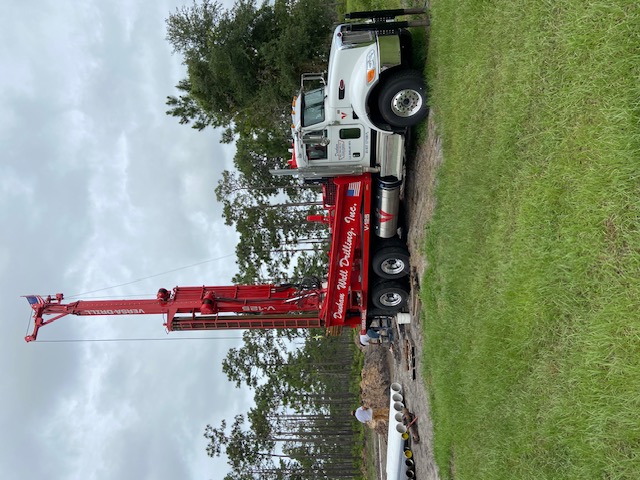
When there's no water from your well, the cause is usually one of a few things: a power or pressure switch problem, a failed pump or motor, a pressure tank issue, lightning damage, or a water level that has dropped below the pump. Some of these are simple, and some mean the pump has to come out of the ground. Here's how we think through it at our Winter Haven shop, what you can safely check yourself, and when to pick up the phone.
Common Reasons for No Water From a Well
We've been drilling and servicing wells in Polk County since 1950. In that time, sudden water loss has almost always traced back to a short list of causes. Knowing them helps you describe the problem clearly when you call, which helps us show up with the right parts.
Electrical and Pressure Switch Problems
Your pump runs on its own circuit. A tripped breaker, a blown fuse, or a burned set of contacts on the pressure switch can stop everything at once. The pressure switch tells the pump when to turn on and off. When its contacts pit or stick, the pump never gets the signal to start.
A breaker that trips is telling you something is wrong, often a motor drawing too much current or a short somewhere in the line. Resetting it over and over can damage the motor further or create a safety hazard. Pressure switches carry live household voltage, so this is not a do-it-yourself repair.
Pump or Motor Failure
Pumps wear out. A submersible pump sitting deep in the well can lose its motor windings, wear its impellers, or seize up after years of service. A jet pump above ground can lose its prime, especially after a power outage or a leak in the suction line.
Signs of pump trouble include:
- Humming with no water, which often points to a seized pump or failed start capacitor
- Short cycling, where the pump clicks on and off rapidly before quitting
- Weak pressure that got worse over weeks before stopping entirely
- Air spitting from faucets, which can mean a leak in the drop pipe or a falling water level
Pressure Tank Trouble
The pressure tank stores water under pressure so your pump doesn't start every time you open a tap. When the bladder inside fails, the tank becomes waterlogged. The pump short cycles, burns itself out, and can eventually stop altogether. A tank under pressure can be dangerous to open or adjust, so leave the service work to a licensed contractor.
Florida-Specific Causes of a Dry or Failing Well
Central Florida wells face a few problems that owners up north rarely see. Our geology, our weather, and our irrigation habits all play a part.
Lightning Strikes
Polk County and Central Florida see more lightning than most of the country, and we see the results every summer. A nearby strike can travel through the ground or the power line and take out a pump motor, a pressure switch, or a control box in an instant. If your water stopped during or right after a storm, lightning is a strong suspect.
Our lightning damage repair service covers pump and motor repair, pressure switch and control replacement, and well casing assessment. We also work directly with your insurance company on the claim, which takes a lot of the hassle off your plate.
Dropping Water Levels
Much of Central Florida draws from the Floridan aquifer, with shallower wells pulling from the surficial aquifer closer to the surface. During the spring dry season and long stretches without rain, water levels can fall. A shallow well, or a pump set too high in a deeper well, may suddenly find itself pulling air.
Shallow 2-inch irrigation wells are most sensitive to this because they draw from that upper water table. If your sprinklers quit during a dry spell but your house water is on a separate deeper well, the water table may be the reason. Our shallow irrigation wells page explains how we assess suitability based on the local water table, since some Polk County areas hold up better than others.
Clogging, Sand, and Mineral Buildup
Iron, sulfur, and sand are common in Florida well water. Over time, mineral scale and sediment can clog a well screen, a check valve, or a whole-house filter until flow slows to a trickle. If your water had a rotten-egg smell, orange staining, or grit before it stopped, buildup may be part of the problem. Once the flow issue is fixed, our water filtration and treatment team can test your water on-site and recommend iron removal, chlorination, or hydrogen sulfide treatment to keep it from happening again.
What You Can Safely Check Before You Call
You don't need tools for these. They're observations that help narrow things down, and none of them involve opening electrical boxes or touching the tank.
- Is the rest of the house powered? A neighborhood outage explains a lot.
- Did a storm just pass through? Note the timing for lightning and insurance purposes.
- Is the irrigation system running? A sprinkler zone running at the same time can pull pressure down and make the house seem dry.
- What does the pressure gauge read? Just look. A reading near zero tells us something different than a normal reading with no flow at the tap.
- Do you hear the pump? Humming, clicking, or silence are all useful clues.
- Is there water pooling near the wellhead or tank? That can point to a broken pipe.
If the breaker for the well is tripped, write that down and tell us. Don't keep resetting it, and don't open the pressure switch cover or control box. Those components carry live voltage. Anything involving electrical service, the pressure tank, or a well deeper than a hand-driven shallow point is work for a licensed contractor.
How Dunham Diagnoses and Repairs a Well With No Water
When we come out, we test the electrical supply, the pressure switch, the control box, and the tank before deciding whether the pump needs to be pulled. Testing first means you aren't paying for a new pump when a switch was the real problem.
If the pump does need work, our full-line machine shop lets us rebuild pumps and turbines in-house instead of always replacing them. When replacement makes more sense, we carry Goulds, Sta-Rite, Grundfos, and Schaefer pumps, both new and used, and new pump and tank installations come with the standard manufacturer's warranty. You can read more on our pump repair and installation page.
Sometimes a well has simply reached the end of its life, or the water level no longer supports it. In that case, we can talk through water well drilling options, from 2-inch shallow irrigation wells to 4 to 8 inch deep wells for drinking water. We're a Licensed Water Well Drilling Contractor and a member of the Florida Ground Water Association.
Is No Water From Your Well an Emergency?
We treat two situations as emergencies: a drinking water well that has stopped working and a mobile-home-park well that is down. If either one describes your situation, call us any time. Our 24/7 answering service is always live, and calls are returned within 48 hours. Regular shop hours are Monday through Friday, 7:30 AM to 4:30 PM.
We serve homeowners, farms, and mobile-home parks across Polk County and Central Florida, including Winter Haven, Plant City, Zephyrhills, and Kissimmee.
If your well stopped giving water, your pump is humming without pumping, or a storm knocked out your system, call Dunham Well Drilling at (863) 965-2881. We've been solving Polk County water problems for 76 years, and with our own machine shop and direct insurance claim help on lightning damage, we can often get you back to running water without starting from scratch.
Have a well or pump question?
Skip the form and call us. Our 24/7 answering service is always live.
Call (863) 965-2881