What is the right size pressure tank for my well?
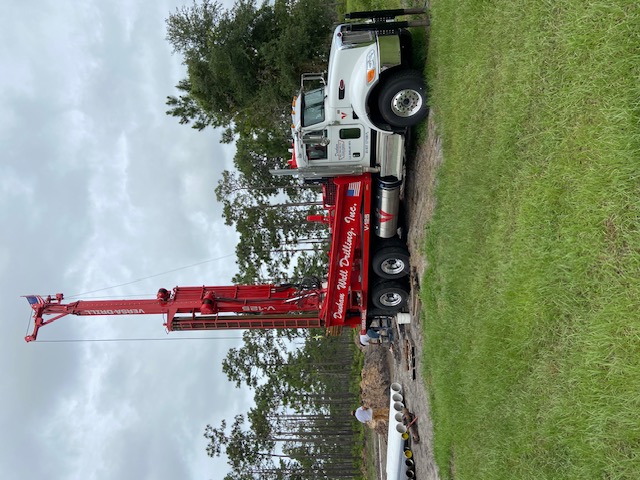
A properly sized pressure tank for well service helps your pump cycle less often, keeps water pressure steadier, and protects the system from unnecessary wear.
How a Well Pressure Tank Size Is Chosen
The right tank size depends on the pump system, water demand, and pressure switch settings, not just the physical space available. A tank that is too small can cause rapid pump cycling, while one that is too large may take up more room than you need without solving the real issue.
For Central Florida homes, farms, and commercial properties, we look at how the system is used day to day. A household with normal shower, laundry, and kitchen demand has different needs than an irrigation setup or a high-use property with multiple fixtures running at once.
If you need help sorting out the right setup, we handle pump repair and installation for residential, irrigation, commercial, and industrial systems across Polk County and Central Florida.
The main factors we look at
- Pump type: jet, submersible, centrifugal, or turbine
- Water use pattern: steady household use or intermittent high demand
- Pressure switch setting: common cut-in/cut-out settings affect tank drawdown
- Available space: especially in utility rooms, pump houses, and mobile-home setups
- System condition: older tanks, switches, and controls may change the recommendation
A pressure tank is part of the system, not a standalone fix. If the pump is undersized, the well is struggling, or the controls are failing, the tank alone will not solve the problem.
Common Signs Your Pressure Tank May Be Too Small
One of the clearest signs of a sizing problem is short cycling, the pump turns on and off too often. That can happen when the tank has too little drawdown capacity for the system’s demand.
Other warning signs include:
- Water pressure that rises and falls quickly
- The pump clicking on for very short bursts
- Visible wear on pressure switch or control components
- A tank that was replaced without adjusting the rest of the system
- Pressure changes when more than one fixture runs at a time
If your system is acting up after a power surge or lightning strike, we also provide lightning damage repair for well systems, including pump, motor, pressure-switch, and control issues.
What short cycling can lead to
Short cycling puts extra wear on the pump motor, pressure switch, and electrical components. Over time, that can mean more repairs and a shorter service life for the system.
It can also make pressure feel inconsistent indoors. You may notice the shower pressure fading, the kitchen faucet pulsing, or the pump coming on more often than it should.
What Size Pressure Tank Do Most Wells Need?
There is no single tank size that fits every well. The correct choice depends on how much water you need between pump cycles and what kind of pump is installed.
For many residential systems, the practical answer is not “the biggest tank possible,” but the tank that matches the pump and usage pattern. In some cases, a smaller tank is enough. In others, especially where irrigation or higher-volume use is involved, a larger tank may make more sense.
If your water supply also needs treatment for hard water, odors, or staining, we can look at the whole system together through water filtration and treatment. We do both pump and filter work, which helps avoid mismatched equipment.
Residential vs. irrigation demand
A home well and an irrigation well are not sized the same way.
- Residential wells usually need steady, reliable pressure for daily household use
- Irrigation wells may need larger drawdown capacity or different pump settings because they run longer and move more water
- Commercial or agricultural systems often require specialized tank and pump planning
If you are working with a shallow irrigation setup, see our shallow 2-inch irrigation wells page for more about cost-effective irrigation use in the right areas.
Why Tank Size Matters for Central Florida Wells
Central Florida well systems deal with local aquifer conditions, seasonal water demand, and high irrigation use. In Polk County and surrounding areas, the right pressure tank can help a system run more smoothly and reduce unnecessary wear.
That matters whether you are on a residential property in Winter Haven or managing a larger irrigation setup in the region. We have been working with local well conditions for three generations, and that experience helps when sizing a system to match the actual water demand.
If you are in our home area, our Winter Haven well service page explains more about the work we do from our shop at 1341 42nd Street NW.
When a bigger tank helps
A larger tank can be useful when:
- The pump cycles too often
- Several fixtures may run at once
- The property has irrigation demand
- You want longer run times and fewer starts
- The existing system was sized too small
That said, bigger is not always better. The tank should be chosen to fit the pump and pressure settings, not guessed at by appearance alone.
When to Call Dunham for Pressure Tank Help
Call us if your pump is short cycling, your pressure is unstable, or you are replacing a tank and want the system sized correctly from the start. We install pressure tanks as part of new well jobs and handle pump and tank work in-house with our full-line machine shop.
We carry Goulds, Sta-Rite, Grundfos, and Schaefer pumps and can rebuild many pump and turbine components on site. That matters when the issue is bigger than the tank alone.
We are a family business founded in 1950, a Licensed Water Well Drilling Contractor, and a Florida Ground Water Association member serving Polk County and Central Florida.
If you need help choosing the right pressure tank for well service, call Dunham Well Drilling at (863) 965-2881. We are here for Central Florida well owners who want the job sized correctly the first time, backed by 76 years in business and a full machine shop on site.
Have a well or pump question?
Skip the form and call us. Our 24/7 answering service is always live.
Call (863) 965-2881