Why is my shallow well water sandy or gritty?
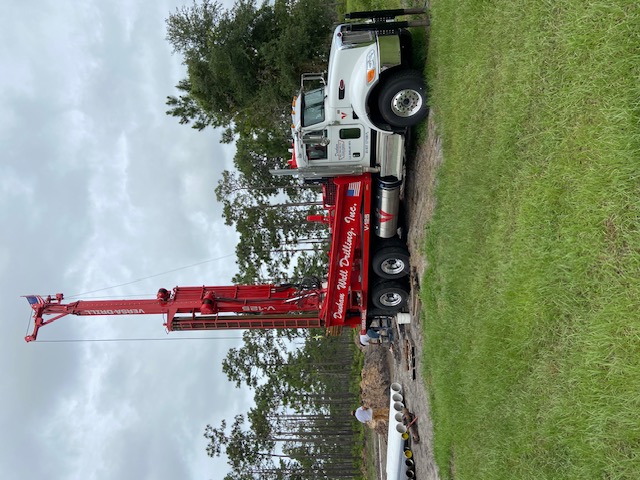
Shallow well water sandy or gritty usually means the well is pulling in sand, silt, or sediment from the formation, from a worn pump component, or from a well issue that needs professional attention.
Why shallow well water gets sandy
A little sediment in a shallow well can come from the aquifer itself. In parts of Central Florida, shallow wells are drawing from water-bearing sand layers, so if the well is not constructed or maintained well, fine material can move into the system.
Common causes include:
- A damaged or worn pump
- A failed or missing well screen
- A deteriorated casing
- A well that is pumping too hard for the formation
- A water table change that brings in more sediment
- A well that has not been properly developed after drilling
If the water turns gritty suddenly, that often points to a new problem with the pump or the well structure. If it has been gradual, the well may simply be aging or producing more sediment than it should.
Shallow well water sandy? What the grit usually means
When customers call us about shallow well water sandy, they are usually noticing one of two things: visible sand in the water or a fine gritty feel at fixtures and appliances.
Sand in the water line
If you can see actual sand settling in a bucket, the well may be pulling sediment from the formation. That can happen if the well is screened poorly, if the casing has failed, or if the pump is set in a way that stirs up material at the bottom.
Fine grit at faucets and appliances
A fine gritty feel can also come from worn pump parts or mineral scale breaking loose. In some cases, the well water itself is not sandy, but the system is sending debris into the house plumbing.
If you are not sure which one you are dealing with, we can help determine whether the problem is the well, the pump, or the water quality itself through our Pump Repair & Installation and Water Filtration & Treatment services.
Common causes in Central Florida shallow wells
Central Florida shallow wells can be productive, but they depend on local water table conditions and the sand layers below ground. At Dunham Well Drilling, we have been working in Polk County aquifer geology for three generations, so we see these conditions often.
1. The pump is set too low or is worn out
A pump that sits too close to the bottom can pull sediment into the system. A worn impeller or damaged internal parts can also reduce performance and increase grit movement.
We repair and install every common pump type, including jet pumps, submersible pumps, irrigation pumps, turbine pumps, and centrifugal pumps. Our on-site machine shop lets us rebuild pumps and turbines in-house when that is the right fix.
2. The well screen or casing is failing
If the screen is damaged or the casing has deteriorated, sand can enter the well more easily. That can lead to cloudy water, gritty fixtures, and premature wear on pumps and valves.
3. The well needs professional evaluation
Not every shallow well problem is solved with a filter. Sometimes the issue is the well construction itself, the pump setting, or the yield of the formation. We offer Water Well Drilling for new wells, and we also help evaluate whether a shallow well is still a good fit for the property.
What to do if your shallow well water is sandy
Do not ignore gritty water. Sand can wear out faucets, clog appliances, and shorten the life of pumps and pressure equipment.
Here is the practical order of checks:
Stop and observe the problem
Note whether the grit is constant or only shows up after the pump starts.Check for pump wear or pressure problems
A pump issue can send sediment through the house or reduce the well’s ability to recover cleanly.Look at the well condition
A damaged casing or screen often requires a professional inspection.Test the water
If the issue includes staining, odor, or hardness, water treatment may also be needed.Call a well company that does both pump and filter work
That matters, because a lot of companies only handle one side of the problem.
Dunham does both pump and filter work, which helps us sort out whether the fix is mechanical, structural, or treatment-based.
Can a filter fix sandy shallow well water?
Sometimes, yes. Sometimes, no.
A sediment filter can help with fine grit, but if the well is actively pulling sand, a filter alone may only hide the symptom while the real problem continues. In those cases, the pump or well needs attention first.
Our Water Filtration & Treatment service covers whole-house treatment systems for hard, smelly, or staining well water, including softeners, chlorination systems, iron removal systems, iron-sequestering systems, and hydrogen sulfide treatment. We also do on-site water testing to identify what is actually in your water.
When to call for help
You should call a professional if:
- Sand is showing up in sinks, tubs, or appliances
- The water pressure has dropped
- The pump is cycling more often than usual
- You hear abnormal pump noise
- The water looks cloudy after the pump starts
- You have a shallow well that has started producing grit after years of normal use
If you are in Polk County or elsewhere in Central Florida, we can inspect the system and recommend the right fix. For properties that need a new shallow irrigation setup, see our Shallow (2-Inch) Irrigation Wells page for the cost-effective option that many landowners use for regular irrigation needs.
If your shallow well water is sandy, call Dunham Well Drilling at (863) 965-2881 during business hours or use our 24/7 answering service after hours. We have served Winter Haven and Central Florida since 1950, and our full-line machine shop, pump service, and well drilling experience help us handle the problem from start to finish.
Have a well or pump question?
Skip the form and call us. Our 24/7 answering service is always live.
Call (863) 965-2881