Waterlogged Pressure Tank: Signs Your Well Tank Has Failed
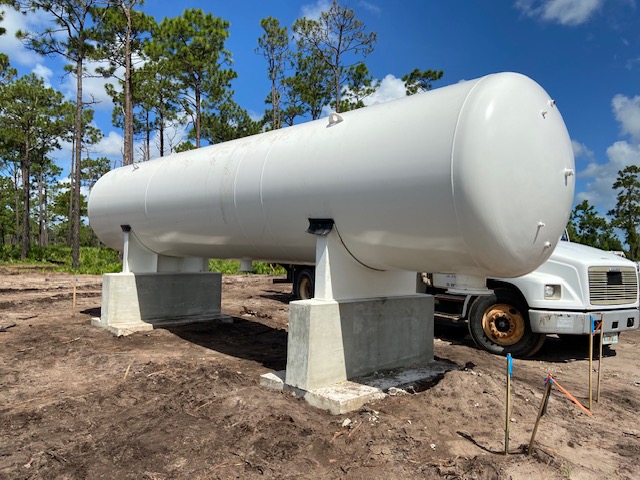
A waterlogged pressure tank is one of the most common, and most misunderstood, well problems Central Florida homeowners face, and catching it early can save you from a burned-out pump and a much bigger repair bill.
What Is a Waterlogged Pressure Tank?
Your pressure tank does two jobs: it stores pressurized water so your pump doesn't have to cycle on for every cup of coffee or toilet flush, and it protects the pump motor from the wear that comes with short-cycling. Inside the tank is a rubber bladder or diaphragm that separates the air charge from the water. When that bladder fails, or when the air charge bleeds off over time, water fills the entire tank. That's a waterlogged tank.
Without the air cushion, the tank can't store any meaningful pressure. The pump has to kick on and off every few seconds to keep up with demand. Pump motors aren't designed for that kind of duty cycle. Left alone, a waterlogged tank will eventually kill a perfectly good pump, and pump replacements cost considerably more than a tank swap.
What Can Shorten Tank Life in Florida
Bladders and air charges wear out with age everywhere, but local conditions don't help. Many Central Florida wells carry dissolved iron and hydrogen sulfide, and our frequent summer lightning can damage pumps and controls. That's why it's worth having the whole system looked at when a tank fails, not just the tank.
Signs Your Pressure Tank May Be Waterlogged
You don't need a gauge or a technician to spot the early warning signs. Watch for these:
- Pump short-cycling. The pump clicks on and off rapidly, sometimes every few seconds, even when you're only running one fixture. This is the most reliable indicator.
- Pressure fluctuations at the tap. Water pressure surges and drops in a rhythmic pattern while you're running the shower or a hose bib.
- Pump runs constantly. In some cases the pump never quite shuts off because pressure can't build to the cut-off point.
- Banging or water-hammer sounds in the pipes when a fixture closes, the tank isn't absorbing the pressure spike the way it should.
- The tank feels completely solid when you knock on it. A healthy tank with a good air charge will sound hollow in the upper portion. A waterlogged tank sounds and feels like a full metal drum all the way up.
- Higher electric bills with no obvious explanation, a short-cycling pump draws more power per gallon delivered.
If you're seeing two or more of these at once, the tank has very likely failed or is close to it.
What About Checking the Air Valve?
There's an air valve (Schrader valve) on the top of most pressure tanks, it looks like a tire valve. A technician can check the pre-charge pressure there with the pump off and the system depressurized. On a bladder tank, if you press the valve and water comes out instead of air, the bladder has ruptured. That tank needs to be replaced, not recharged.
Do not attempt to recharge or work on a pressure tank yourself. Pressure tanks involve both pressurized water systems and electrical connections to the pump. Call a licensed contractor.
What Happens If You Ignore a Waterlogged Pressure Tank
Short-cycling is hard on pump motors in the same way that stop-and-go traffic is hard on a car engine, the startup load is the most punishing part of the cycle. A pump that starts hundreds of times a day instead of a handful of times will fail prematurely. Submersible pumps, which are the most common type for deep drinking-water wells in Polk County, sit at the bottom of the well casing. Pulling and replacing one is a significant job. Replacing a pressure tank while the pump is still healthy is almost always the less expensive path.
There's also the water quality angle. A ruptured bladder can allow the tank's interior steel surface to contact your drinking water, which can introduce rust and sediment into the lines.
How Dunham Handles Pressure Tank Replacement
When you call us about a waterlogged pressure tank, we're not just swapping hardware. Our pump repair and installation team will check the full system, pump performance, pressure switch settings, and the condition of the tank itself, before recommending a course of action. We carry Goulds, Sta-Rite, Grundfos, and Schaefer tanks and pressure systems, both new and used, and we have an on-site machine shop that lets us rebuild pumps in-house when a pump problem accompanies the tank failure.
New pressure tank installations come with a standard manufacturer's warranty, and because we do both pump and water filtration and treatment work, we can flag any water quality issues that may have accelerated your tank's bladder failure in the first place, hard water and iron are common culprits in Central Florida wells.
We serve Polk County and the surrounding Central Florida area from our shop at 1341 42nd Street NW, Winter Haven, FL 33881, and we run a 24/7 answering service, always live, so you're never leaving a message with a machine when your water pressure is acting up.
Call Us Before the Pump Goes With It
If your pump is short-cycling or your pressure is bouncing around, call Dunham Well Drilling at (863) 965-2881 before a failed tank becomes a failed pump. We've been diagnosing and repairing well systems in Central Florida since 1950, 76 years of Polk County aquifer experience, and our on-site machine shop means we can handle whatever we find without farming the work out. Calls are returned within 48 hours, and most pressure tank issues are straightforward to diagnose once we're on-site.
Have a well or pump question?
Skip the form and call us. Our 24/7 answering service is always live.
Call (863) 965-2881