Why is my well water sandy or gritty?
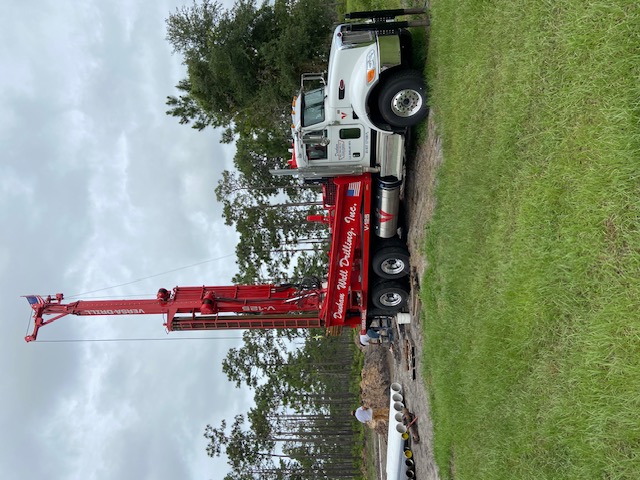
Well water sandy gritty usually means sand is getting into the system somewhere between the aquifer, the well, and the pump, and the fix depends on whether the problem is in the well itself, the pump setup, or a failing part in the system.
Why well water turns sandy or gritty
A gritty feel in your water is usually actual sand or fine sediment, not just “dirty” water. In Central Florida, that can happen when a well is producing from a sandy formation, when the well screen or casing is worn, or when the pump is pulling from too low in the well.
Sometimes the problem shows up only at certain times, such as after heavy pumping, during drought, or after a pump repair. If the water starts out clear and then turns sandy, that often points to the well or pump moving sediment that has settled lower in the system.
Common causes of sandy well water
1. The well is pulling sand from the aquifer
Some wells simply produce fine sand along with water, especially if the well is older or the local formation is loose. In parts of Polk County, that can be tied to the way the well was drilled and how the water-bearing zone behaves over time.
If the well was drilled for irrigation or is a shallow system, sand intrusion can show up more easily. We see this often enough that our Water Well Drilling work includes site evaluation and casing selection based on local conditions.
2. The screen, casing, or gravel pack is failing
A well’s screen and casing are supposed to keep sediment out while letting water in. If those parts wear out, break down, or are installed incorrectly, sand can move into the water stream.
That problem is not something to guess at. It usually takes a proper inspection and, in some cases, pump pull and well evaluation to see what is happening below the surface.
3. The pump is set too low or is wearing the well
If a submersible pump is set too close to the bottom, it can stir up sand. A worn pump can also create flow conditions that pull more sediment than the system should be seeing.
We handle Pump Repair & Installation for residential, irrigation, commercial, and industrial systems, and we rebuild pumps and turbines in-house with our full-line machine shop. That matters when the issue is not just sand, but a pump that is no longer moving water the way it should.
4. The well is being overpumped
When demand is higher than the well can comfortably supply, the pump may draw water faster than the formation can replenish it. That can pull sediment into the system, especially in shallow or high-use wells.
This is common with irrigation use, especially when a property relies heavily on a shallow well or an older system that has never been reworked for current demand.
5. There is a problem after a storm, lightning strike, or repair
A lightning event can damage pumps, controls, and other electrical parts tied to the well system. After a repair, sand complaints may show up if the pump was reinstalled at the wrong depth or if a damaged part is affecting performance.
Our Lightning Damage Repair service covers pump and motor repair after a strike, pressure-switch and control replacement, and well casing damage assessment. We also work directly with your insurance company on the claim.
What sandy water can do to your system
Sand in well water is more than a nuisance. It can wear out faucets, shower valves, water heaters, toilets, pressure tanks, and appliance parts over time.
It can also shorten the life of pump components if the system keeps moving abrasive material through the lines. If the water feels gritty and you see a drop in pressure or flow, the problem may be moving beyond the “annoying” stage.
What to check before you call
You can look for a few clues, but not a fix. If your water is sandy gritty, check whether:
- The grit shows up at every faucet or only one fixture
- The problem started after a pump repair or power issue
- The water gets worse when irrigation is running
- The pressure is lower than normal
- The water clears after running for a while
If the water remains sandy, do not keep guessing at pump depth, wiring, or pressure-tank adjustments. Those are jobs for a well contractor.
How we diagnose sandy or gritty well water
At Dunham Well Drilling, we look at the whole system, not just the symptom. That often includes checking the pump, pressure tank, controls, and the well itself to see where the sand is coming from.
If water quality is also a concern, our Water Filtration & Treatment service includes on-site water testing and whole-house systems for hard, smelly, or staining water. While filtration does not fix every sand problem at the source, it can be part of the solution when water needs treatment after the main issue is corrected.
Depending on what we find, the answer may be:
- Pump adjustment or replacement
- Well evaluation and repair
- New pump and tank installation
- Filtration or treatment for secondary water quality issues
- Well abandonment if an unused well is part of the problem
When a filter helps and when it does not
A filter can help catch sediment, but it is not always the right first answer. If the well is actively producing sand, a filter may clog quickly and mask a problem that should be corrected at the source.
We also handle Shallow (2-Inch) Irrigation Wells for properties that need a cost-effective irrigation source. For properties with regular watering needs, that can be a practical option compared with metered municipal water.
If you are dealing with sand in a water system used for irrigation, we can also help with Irrigation Repair & Installation and the pump side of the system, so you are not juggling multiple contractors.
Call Dunham for a real diagnosis
If your well water is sandy gritty, call us when the problem starts, after a storm or pump issue, or anytime the water quality changes and you do not know why. We have been serving Polk County and Central Florida since 1950, and we bring a full machine shop, FGWA membership, and decades of well experience to the job.
Call Dunham Well Drilling at (863) 965-2881. Our 24/7 answering service is always live, and calls are returned within 48 hours.
Have a well or pump question?
Skip the form and call us. Our 24/7 answering service is always live.
Call (863) 965-2881