What does the Florida aquifer map mean for my well?
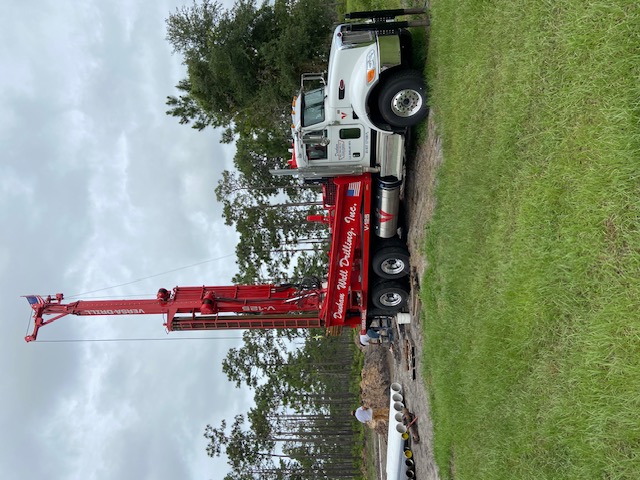
If you’re looking at a Florida aquifer map well owners use to understand local water supply, the short answer is this: the map can tell you what aquifer system your well is likely drawing from, but it does not replace a site-specific well evaluation, pump sizing, or water testing.
What a Florida aquifer map can tell you about your well
A Florida aquifer map shows the broad groundwater systems under different parts of the state. For a Central Florida well owner, that matters because aquifer depth, water quality, and yield can vary from one area to the next.
What the map can help you understand:
- whether your property is more likely to support a shallow irrigation well or a deeper drinking-water well
- why one neighborhood may have different water levels or water quality than another
- why well performance can change with local geology and seasonal groundwater conditions
What it cannot tell you:
- the exact depth of water on your lot
- whether your existing pump is sized correctly
- whether your water needs treatment for hardness, iron, or sulfur smell
That’s where a local well company comes in. At Dunham Well Drilling, we work with Polk County aquifer conditions every day through our Water Well Drilling and Shallow (2-Inch) Irrigation Wells services.
What the map means for drilling depth, yield, and water quality
Well depth and aquifer access
A Florida aquifer map can give you a starting point for understanding whether your well should be shallow or deep. In our area, some properties are good candidates for 2-inch shallow irrigation wells, while others need 4-inch to 8-inch deep wells for drinking water or higher-volume use.
That decision depends on more than the map. We look at site conditions, local water table behavior, and the intended use of the well before recommending a drill path. On a new-well job, we also handle site evaluation and casing selection as part of the process.
Yield and pump expectations
Even if the aquifer looks favorable on a map, the well still has to perform on your property. Yield affects whether you can support irrigation, household demand, or both.
If a well is underperforming, the issue may be the pump, the pressure tank, the well depth, or the water conditions around the screen. That is why we offer Pump Repair & Installation with repair and installation of residential, irrigation, turbine, industrial, and centrifugal pumps, plus pressure tanks.
Water quality clues
Aquifer maps do not show the full story on water quality. In Central Florida, well water can be hard, smelly, or staining even when the aquifer itself is producing water normally.
That is why Water Filtration & Treatment matters. We do on-site water testing and install whole-house treatment systems for:
- hard water
- iron staining
- iron-related problems
- hydrogen sulfide, the rotten-egg smell
- chlorination needs
How Dunham uses local aquifer knowledge on real jobs
We have three generations of drilling experience in Polk County aquifer geology, and that matters when a map only gives you the big picture. A Florida aquifer map can point us in the right direction, but our field experience tells us how that geology behaves on a specific property.
For example, a shallow irrigation well may make sense on one lot and not another. When it does make sense, it can often pay for itself in a short period compared with metered municipal water, especially for regular irrigation needs.
We also know that some projects need more than drilling. If the issue is an old unused well, our Well Abandonment service handles compliant abandonment under Florida Statutes, and we file the state rebate paperwork on the customer’s behalf.
Common questions Central Florida well owners ask
Does the aquifer map mean my water will be good?
No. The map helps show the groundwater system, but water quality still needs to be tested. Two wells drawing from the same general aquifer can still have different levels of iron, hardness, or sulfur.
Can I use the map to decide whether to drill a shallow well?
It can help you start the conversation, but it should not be the only factor. We look at the property, the intended water use, and local conditions before recommending a shallow well or a deeper well.
What if my well is losing pressure?
That can be a pump issue, a pressure tank issue, or a well-related issue. Don’t guess at electrical or pressure-tank work. Call us so we can diagnose it properly and recommend the right repair.
Do you handle lightning-related well problems?
Yes. Our Lightning Damage Repair service covers pump and motor repair after a lightning strike, irrigation system electrical repair, pressure-switch and control replacement, and well casing damage assessment. We also work directly with your insurance company on the claim.
When to call Dunham Well Drilling
Call us when you’re trying to understand what a Florida aquifer map means for your well, when your water pressure changes, when your water has a smell or stain, or when you need drilling, pump work, filtration, irrigation repair, or well abandonment done by a local shop that knows Polk County conditions.
We’re based at 1341 42nd Street NW in Winter Haven, and we serve Polk County and Central Florida with a 24/7 answering service. Call (863) 965-2881 and we’ll return your call within 48 hours. With 76 years in business, three generations of drilling experience, and a full-line machine shop for in-house pump and turbine rebuilds, Dunham is ready to help.
Have a well or pump question?
Skip the form and call us. Our 24/7 answering service is always live.
Call (863) 965-2881