Why is my well water rusty after rain?
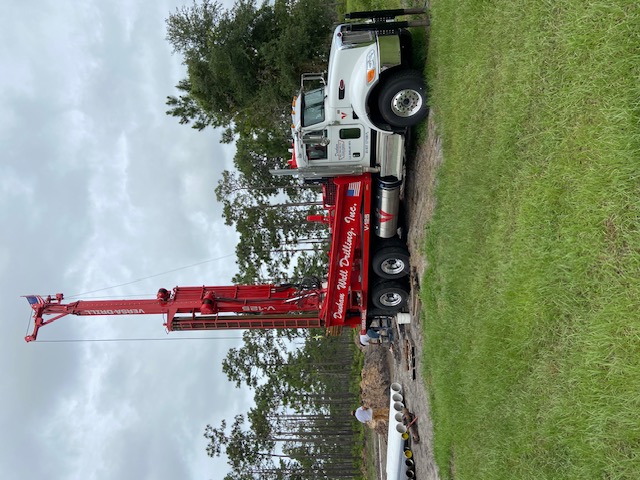
Well water rusty after rain usually means stormwater has changed what’s moving through your well system, your casing, or the aquifer feeding it, and the fix depends on whether the problem is the well itself, the pump, or the water chemistry.
Why well water turns rusty after rain
In Central Florida, heavy rain can stir up iron, sediment, and other minerals that were already present in the ground. If your well is shallow, older, or has a casing issue, rain can also allow surface water to affect the water entering the system. That can show up as orange, brown, or reddish water at the tap.
A few common causes include:
- Iron in the water supply getting disturbed by changing groundwater levels
- Sediment entering the well through a damaged casing, cap, or seal
- Aging pump or pressure tank parts releasing rust-colored material
- Iron bacteria contributing to staining, odor, or slime buildup
- Water chemistry changes after storms that make existing iron more noticeable
If the water clears after running for a while, the issue may still be worth checking. If it stays discolored, or if it comes back every time it rains, it’s time for a well inspection and water testing.
What rain is actually doing to your well
Rain can raise the water table and change how water moves around the well. In Polk County, that matters because local geology and groundwater conditions can make some wells more sensitive to seasonal changes than others. A shallow well used for irrigation may react differently than a deeper drinking-water well.
Shallow wells and storm-related discoloration
A 2-inch shallow irrigation well can be a practical setup for many properties, but shallow systems are more exposed to what’s happening near the surface. If rainwater carries fine sediment into the area around the well, you may see cloudy or rusty water shortly after a storm. We install and service these systems through our shallow wells work.
Deep wells and casing concerns
Deep wells are less exposed, but they are not immune. If the well casing, cap, or seal is compromised, rain can contribute to contamination pathways or cause sediment to move where it shouldn’t. That’s one reason we look at the well structure, not just the water at the faucet, when a customer calls about rusty water.
Signs the problem is more than temporary staining
Rust-colored water after rain can be a nuisance, but certain signs point to a larger issue. Call us if you notice:
- Rusty water every time it rains
- Reduced pressure along with discoloration
- Sand or grit in the water
- Orange staining in sinks, tubs, or fixtures
- Rotten-egg odor, metallic taste, or slime buildup
- A pump that sounds different or cycles strangely
Those symptoms can point to iron, bacterial growth, pump wear, or a well component that needs repair. Our water filtration & treatment service can help identify what’s in the water, and our pump repair & installation team can check whether the pump or pressure system is contributing to the problem.
How we diagnose rusty well water
At Dunham Well Drilling, we do not guess at the source of the problem. We start by checking the well system and testing the water so we can separate a water-quality issue from a mechanical one.
Our process can include:
- On-site water testing to identify what’s in the water
- Inspection of the well, casing, and visible components
- Pump and pressure tank evaluation
- Review of filtration equipment, if one is already installed
- Recommendations based on whether the issue is iron, sediment, bacteria, or a system problem
Because we handle both pump work and filter work, we can often keep the diagnosis under one roof instead of sending you to multiple contractors. That matters when the water problem starts after rain and the cause is not obvious.
Treatment options for rusty water
The right fix depends on the source. In some cases, the answer is a water softener or iron removal system. In others, a chlorination system or iron-sequestering system is a better fit. If the water also smells like rotten eggs, we may recommend hydrogen sulfide treatment as part of a broader system solution.
When the issue is mechanical, treatment alone will not solve it. A worn pump, failing tank, or damaged well component can keep pushing rust-colored water through the system until the underlying problem is repaired. That is why we also inspect the equipment through our pump repair & installation service.
When filtration helps
Filtration is often the right move when the water is otherwise sound but contains iron or other minerals that cause staining. We can test the water and match the treatment to the actual problem.
When repair is the real answer
If the discoloration is coming from the well, pump, or pressure system itself, repairs may be needed first. We service residential pumps, irrigation pumps, turbine pumps, industrial pumps, centrifugal pumps, and pressure tanks, and we have a full-line machine shop for in-house rebuilds.
Why call Dunham after a rain-related water change
We’ve been serving Winter Haven and Polk County since 1950, and we know how local wells behave after storms. We are a Licensed Water Well Drilling Contractor and a Florida Ground Water Association member, and we handle well drilling, pump work, irrigation repair, water treatment, lightning damage repair, and well abandonment.
That means one call can cover more than one possible cause:
- Well inspection and drilling work
- Pump and tank service
- Water filtration and treatment
- Irrigation system repair
- Insurance claim assistance for lightning-related system damage
If your well water rusty after rain problem keeps coming back, call Dunham Well Drilling at (863) 965-2881. We’re at 1341 42nd Street NW, Winter Haven, FL 33881, and our 24/7 answering service is always live; calls are returned within 48 hours. After 76 years in business, we can help you figure out whether you need treatment, repair, or a new well solution.
Have a well or pump question?
Skip the form and call us. Our 24/7 answering service is always live.
Call (863) 965-2881