Why is my well water sandy or gritty?
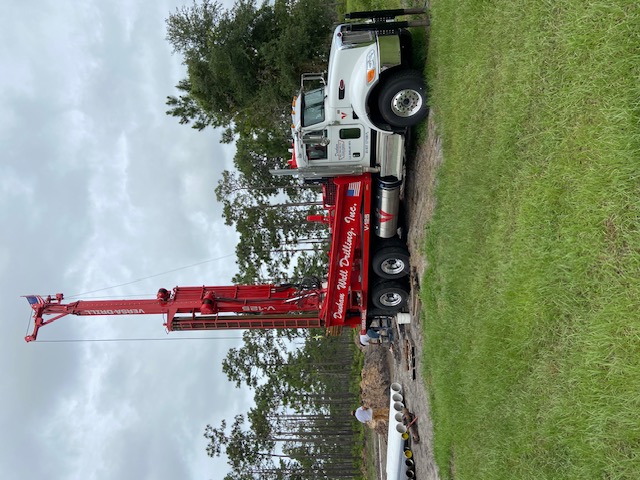
Well water sandy or gritty usually means sediment is getting into the system somewhere, and the fix depends on whether the problem starts in the well, the pump, or the plumbing.
What causes well water to feel sandy or gritty?
In Central Florida, gritty well water usually comes from one of a few sources: sand coming in with the water, a pump that is pulling too close to the bottom of the well, a damaged or missing well screen, or a well that has started to deteriorate over time. In some cases, the issue shows up only after a storm, lightning damage, or pump work.
If the grit is new, don’t ignore it. Sediment can wear out faucets, clog irrigation components, damage a pump, and make a water filter work harder than it should.
Common reasons we see in Polk County
- Pump set too low in the well and pulling up sand
- Worn pump parts or a failing jet/submersible pump
- Well screen or casing problems allowing sediment in
- Disturbed aquifer material after heavy pumping or drought conditions
- Lightning damage affecting the well system and causing pressure or pumping problems
If you’re in Polk County and the water suddenly changed, that’s a good sign the system needs to be checked by a well contractor, not guessed at from the kitchen sink.
How to tell if the grit is sand, sediment, or something else
Not every “gritty” problem is the same. Sometimes it’s actual sand. Sometimes it’s fine sediment that settles in the bottom of a glass. And sometimes what feels like grit is iron or mineral staining breaking loose in the system.
Here are a few clues:
- Sand grains feel sharp and settle quickly
- Fine silt makes water cloudy and leaves a soft layer in the bottom
- Rusty particles may point to corrosion or iron-related buildup
- Black or gray specks can point to scale, rubber, or pump wear
If you are also dealing with hard water, staining, or a sulfur smell, a combination issue may be present. That is where Water Filtration & Treatment can help, especially when the right fix depends on on-site water testing rather than a guess.
Why a pump problem can make well water sandy or gritty
A pump can absolutely be part of the problem. If the pump intake is positioned too low, it may pull sediment from the bottom of the well. If pump components are worn, they can break down and send debris through the system. In some cases, lightning damage can also leave a pump or control system operating poorly enough to disturb the water supply.
That is why we often look at both the pump and the well together. At Dunham Well Drilling, our Pump Repair & Installation work covers residential pumps, irrigation pumps, turbine pumps, industrial pumps, centrifugal pumps, and pressure tanks. We also have a full-line machine shop on-site, so pumps and turbines can be rebuilt in-house when that makes sense.
Signs the pump may be the issue
- Water gets gritty after the pump runs longer than usual
- Sediment increases after a power event or lightning strike
- Pressure changes along with the grit
- The system makes unusual noise or cycles oddly
If those symptoms sound familiar, call us. We can help sort out whether the pump needs repair, replacement, or a deeper well evaluation.
When the well itself needs attention
Sometimes the problem is not the pump at all. Older wells can develop casing issues, screen problems, or other conditions that let sand enter the system. In shallow irrigation setups, the water table and local soil conditions also matter, which is why a proper site evaluation is important before drilling or revising a system.
We’ve been working in the Polk County aquifer since 1950, and that local experience matters. Dunham offers Water Well Drilling for residential, agricultural, and commercial properties across Central Florida, including 2" shallow irrigation wells and 4", 8" deep wells for drinking water and high-volume use.
What we may check
- Well depth and construction
- Pump setting
- Casing and screen condition
- Water yield and sand intrusion
- Whether the system would benefit from a new well or repair
If the well is failing or the problem keeps coming back, repair may not be enough. A new well or a properly planned modification can save time and repeated service calls.
Can filtration fix gritty well water?
Sometimes filtration helps, but only after the source of the grit is understood. A filter can catch sediment, but it will not fix a pump set too low or a damaged well. That’s why filtration works best as part of a complete system check.
We install whole-house treatment systems for hard, smelly, or staining well water, including softeners, chlorination systems, iron removal systems, iron-sequestering systems, and hydrogen sulfide treatment. We also do the testing on-site so we can identify what’s actually in your water before recommending a solution.
If you need both pump work and treatment, Dunham is set up to handle both. That saves you from dealing with separate contractors for the same problem.
What to do next if your well water is sandy or gritty
Don’t keep running the system and hoping the grit goes away. Continued sediment can cause more wear on pumps, fixtures, and treatment equipment. If your water suddenly changed, or if the problem has slowly gotten worse, it’s time for a proper diagnosis.
Call Dunham Well Drilling if you need help with a drinking water well that has stopped working, a mobile-home-park well that is down, or a well system that is producing sand or grit. We’re at (863) 965-2881, and we have a 24/7 answering service; calls are returned within 48 hours. When you call, you’re reaching a family business that has served Winter Haven and Polk County since 1950, with a full machine shop, FGWA membership, and the experience to work on both wells and pumps.
Have a well or pump question?
Skip the form and call us. Our 24/7 answering service is always live.
Call (863) 965-2881