What causes a well pressure tank to lose air?
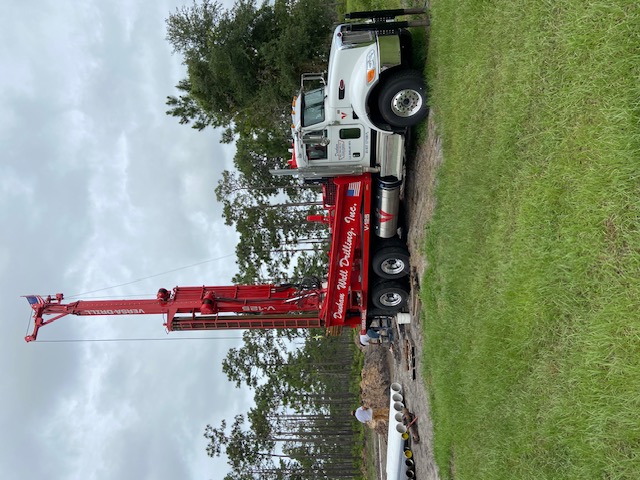
A well pressure tank loses air when there is a leak, a failed bladder or diaphragm, or a system issue that keeps the tank from holding the right air charge, and the fix depends on identifying which part of the system is actually failing.
Why a well pressure tank loses air
A pressure tank is supposed to keep a cushion of air above the water inside the tank. That air helps the pump cycle correctly and keeps water pressure steady in the house or irrigation system. When the air cushion disappears, the pump can short-cycle, pressure can swing up and down, and the tank may fill with too much water.
In a Central Florida well system, the cause is usually one of a few things:
- A leaking tank bladder or diaphragm
- An air leak at the tank’s air valve
- A leak in fittings, unions, or piping near the tank
- A faulty pressure switch or related control issue
- A system setup problem after a pump or tank installation
If your tank is losing air repeatedly, the tank itself may be failing, but you should not guess. The safest move is to call a pro who works on both pumps and pressure tanks, because the tank may be reacting to a bigger system problem.
Common reasons a pressure tank loses its air charge
1) The bladder or diaphragm has failed
Many modern pressure tanks use a bladder or diaphragm to separate air from water. When that separator fails, water can take over the air space, and the tank stops acting like a proper pressure tank.
Signs that point to a failed bladder include:
- Water coming out of the air valve
- The tank feeling waterlogged
- Rapid pump cycling
- Pressure that drops too quickly
When that happens, the tank usually needs repair or replacement. Dunham Well Drilling handles pump repair and installation and pressure tank work, and we rebuild pumps in-house in our full-line machine shop when that is the right solution.
2) The air valve is leaking
The Schrader valve on top of many tanks can leak over time. If the valve core is loose or damaged, the tank slowly loses air even if the rest of the system is fine.
A leaking air valve can be tricky because it may seem like a pump problem when it is really just a small air leak. A proper inspection should include the valve, fittings, and the tank’s air charge. If the tank is on a residential system, a jet or submersible pump setup may also need to be checked for related issues.
3) There is a leak in the plumbing near the tank
Loose fittings, cracked pipe, worn seals, or a small leak near the tank can let air escape from the system. Over time, that can leave the tank undercharged and the pump working harder than it should.
Look for:
- Damp spots around the tank
- Rust or mineral buildup at joints
- Hissing sounds near fittings
- Frequent pressure drops
If the leak is tied to an irrigation or well system, it may be worth having the entire setup evaluated. We handle water well drilling, pump repair and installation, and irrigation repair and installation, so we can trace the problem across the full system instead of treating one symptom.
How to tell whether the tank or the pump is the problem
A pressure tank that loses air does not always mean the tank itself is bad. Sometimes the pump is the real issue, especially if the system is cycling too often or the pressure switch is behaving erratically.
Watch for these signs
- Pump turns on and off too often
- Water pressure pulses or surges
- Tank sounds full of water
- Air spurts from faucets
- The pressure switch clicks repeatedly
If the tank is short on air but the pump is also struggling to build or hold pressure, both parts may need attention. At Dunham, we repair and install residential pumps, irrigation pumps, turbine pumps, industrial pumps, and centrifugal pumps, and we also service pressure tanks. That matters because the tank and pump need to work together.
Why this matters for Central Florida well owners
Polk County and the surrounding Central Florida area have their own well and water conditions. That means a tank problem can show up differently depending on water chemistry, pump type, and how the system was installed.
Hard water, iron, and hydrogen sulfide can all contribute to broader system problems over time. If you also have staining, odor, or mineral buildup, the tank issue may be part of a bigger water-quality problem. In those cases, water filtration and treatment can help protect the rest of the system.
We also know the local aquifer conditions from decades of work in Polk County. Dunham has been family-owned since 1950, and that long history matters when you need a shop that understands local wells, not just general plumbing.
What not to do when your pressure tank loses air
Do not keep adding air blindly without checking the tank’s condition. If the bladder has failed, pumping in air will not solve the problem. Do not open electrical components or pressure controls unless you are qualified to work on them.
Also, do not ignore a tank that is short-cycling. That can wear out the pump, pressure switch, and controls faster than normal. If you have a drinking water well that has stopped working or a mobile-home-park well that is down, that counts as an emergency for us, and you should call right away.
When to call Dunham Well Drilling
Call us if your well pressure tank loses air more than once, if you hear water or air escaping near the tank, or if your pump is short-cycling and pressure is unstable. We offer a 24/7 answering service, and calls are returned within 48 hours.
For service in Polk County and Central Florida, call (863) 965-2881. Dunham Well Drilling brings 76 years of experience, a full machine shop for in-house pump rebuilds, and the ability to handle the pump, tank, and water system as one job instead of three separate calls.
Have a well or pump question?
Skip the form and call us. Our 24/7 answering service is always live.
Call (863) 965-2881